Planet
Saturn
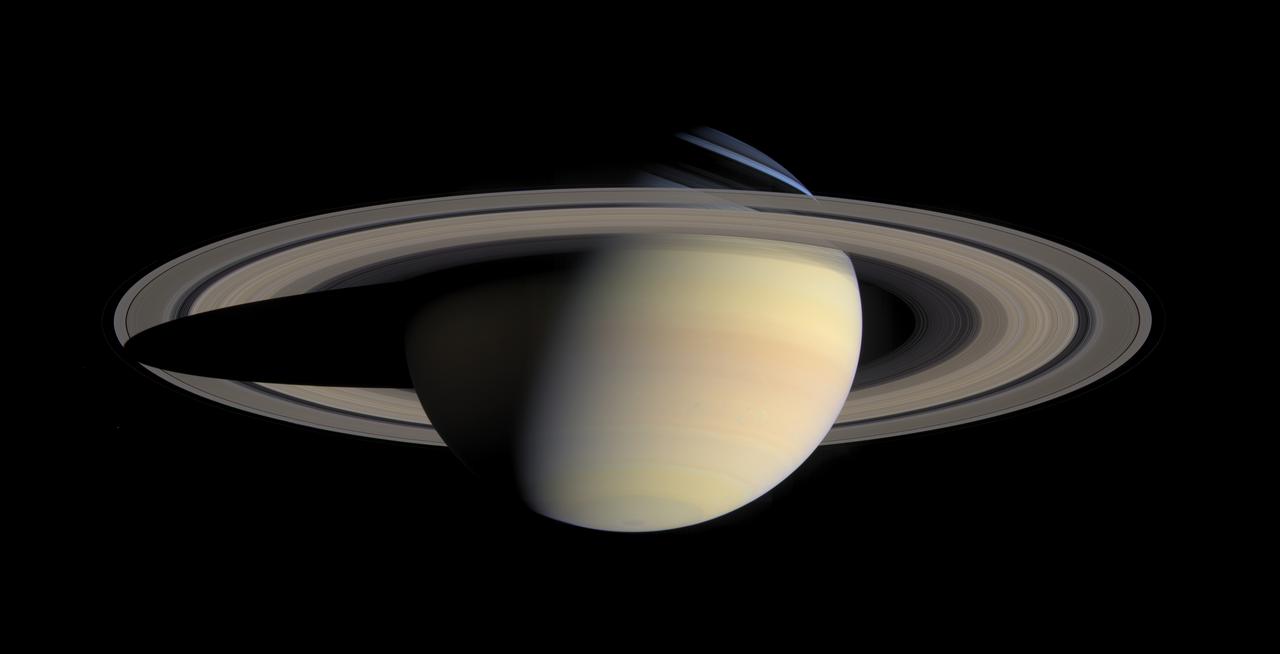
Saturn is the planet with the most beautiful rings. The rings are made of billions of chunks of ice – some as small as grains of sand, some as big as houses. Saturn is so light that it would float in a giant bathtub.
Fact file
- Type
- Planet
- Diameter
- 116,460 km
- Distance from the Sun
- 1,434,000,000 km
- Orbital period
- 29.4 years
- Shape of orbit (eccentricity)
- 0.057 (0 = circle)
- Orbital inclination
- 2.49° to Earth’s orbit
- Axial tilt
- 26.7°
- Temperature
- -139 °C on average
- Mass
- 95.2 Earth masses
- Gravity
- 1.07 times as strong as on Earth
- Escape velocity
- 35.5 km/s
- Length of day
- 10 hours 34 minutes
- Number of moons
- 274
Interesting facts about Saturn
- Saturn has the most impressive ring system in the Solar System, visible even through a small telescope.
- Saturn is so light that it would float in an imaginary ocean – its density is lower than that of water.
- With 274 confirmed moons (as of 2025), Saturn has by far the most moons – 128 new ones were announced in March 2025 alone.
- At the north pole, a hexagonal jet stream (about 30,000 km across) circles with a vortex at its centre; at the south pole, a hurricane-like polar vortex rages with a clearly visible eye.
Frequently asked questions about Saturn
What are the rings of Saturn made of?
The rings are made of countless chunks of water ice, from the size of a dust grain to the size of a house. They are huge but wafer-thin: often only about ten metres thick.
Can you see Saturn's rings from Earth?
Yes, even with a small telescope. About every 15 years we look at the rings exactly edge-on from Earth. For a short time they are then almost invisible, most recently in 2025.
Would Saturn float in water?
In theory, yes. On average Saturn is lighter than water, meaning its density is lower. In a big enough ocean it would float on top.
How big is Saturn?
Saturn has a diameter of 116,460 km. That is about 9.1 times the diameter of Earth.
How far is Saturn from the Sun?
Saturn is on average 1.43 billion km from the Sun. That is 9.59 astronomical units (AU). Sunlight takes about 79.7 minutes to cover this distance.
How long is a year on Saturn?
Saturn takes 29.4 Earth years to travel once around the Sun.
How many moons does Saturn have?
Saturn has 274 known moons. The best known include Titan, Enceladus, Rhea and Mimas.
How cold or warm is it on Saturn?
On Saturn the average temperature is −139 °C.
The ring system
Saturn's main rings are made almost entirely of chunks of water ice (from the size of a dust grain to the size of a house). They are extremely wide (more than 280,000 km), but on average only about 10 metres thick.
Name and discovery
After the Roman god of sowing and harvest, the father of Jupiter. “Saturday” is named after him too.
Visible to the naked eye – known since ancient times. The rings were first seen by Galileo in 1610 – he took them for “ears”.
Formation
Like Jupiter, Saturn formed as a gas giant from the protoplanetary disc. Its rings could be the remains of a destroyed moon or comet.
Atmosphere
Like Jupiter, Saturn is made mainly of hydrogen and helium, with stormy winds of up to 1,800 km/h at the equator. Saturn has no permanent Great Red Spot, but storms of its own: the north polar hexagon with its central vortex, the south polar vortex (eye about 8,000 km across, discovered by Cassini) and, roughly every 30 years, the “Great White Spot”, a giant storm that last encircled the whole planet in 2010/11.
Exploration
The Cassini-Huygens mission (2004-2017) provided the most detailed data so far on Saturn, its rings and moons such as Titan and Enceladus.
Compared with Earth
Saturn is 9 times the diameter of Earth, but has only about an eighth of Earth's density.
Structure: what Saturn looks like inside
- Core: Rock and ice weighing several Earth masses – likewise fuzzy rather than sharply defined.
- Metallic hydrogen: As on Jupiter, but a thinner layer, because Saturn has less mass and therefore less pressure.
- Liquid hydrogen: Saturn is so light that it would float in a (gigantic) bathtub – its density is lower than that of water.
- Cloud layer: Ammonia clouds beneath a veil of haze, which is why Saturn looks paler than Jupiter.
The cloud tops: 7 places on Saturn
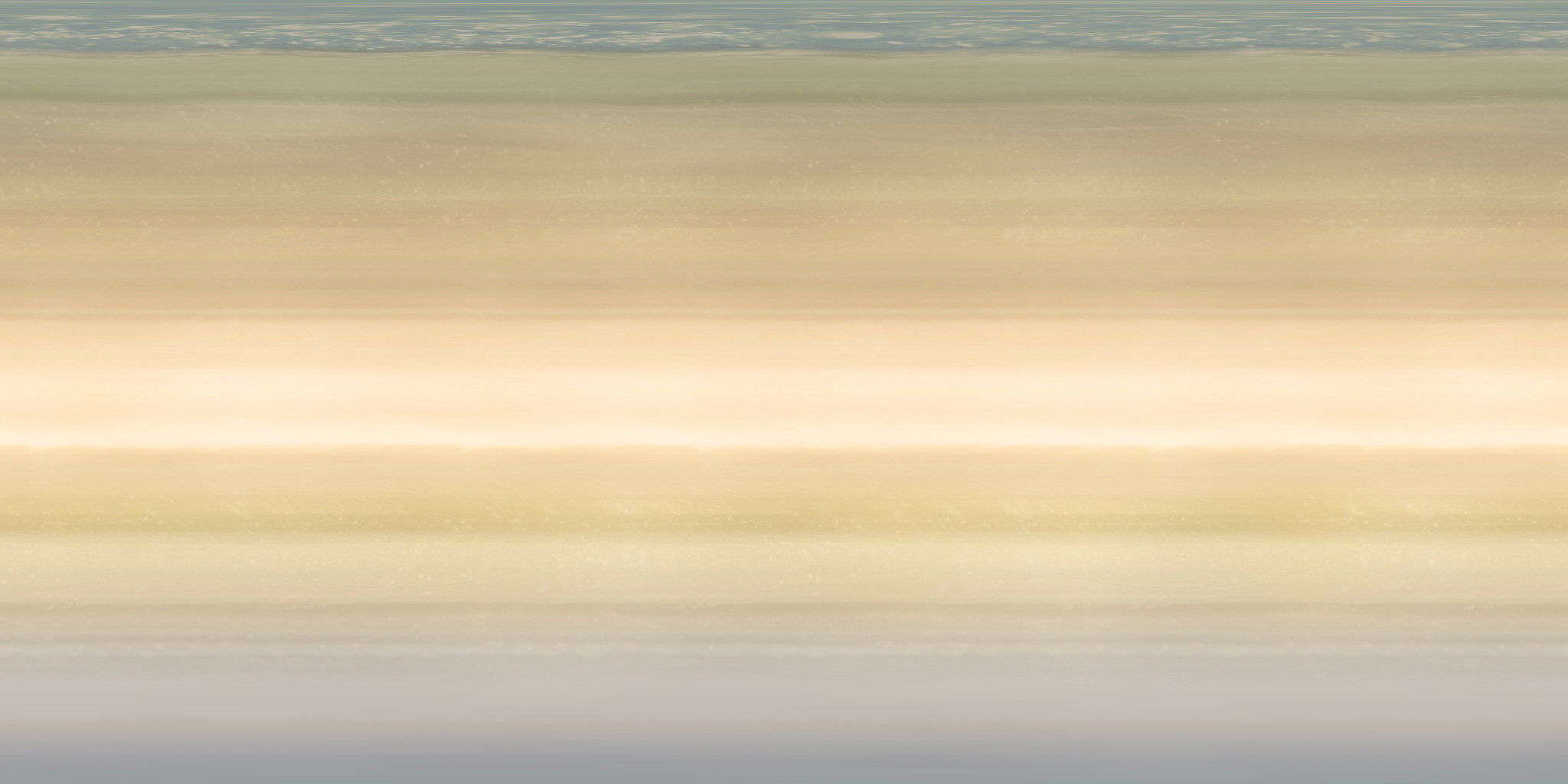
Saturn has no solid surface. A veil of haze mutes the contrasts – the hexagon and polar vortices are barely visible on this map, but easy to see in the 3D model.
Storms and clouds
- Hexagon at the north pole
- A jet stream at around 78° north that forms an almost perfect hexagon – each side longer than Earth's diameter. Discovered by Voyager in 1981 and stable for decades. Its colour changes with the seasons from blue to golden.
- North polar vortex
- At the centre of the hexagon spins a storm with an eye around 2,000 km across.
- South polar vortex
- A hurricane-like storm with a clearly visible eye and towering cloud walls, around 8,000 km across – winds of up to 550 km/h.
- Great White Spot 2010/11
- About once every Saturn year (around 30 Earth years) a gigantic storm breaks out. The one in 2010/11 grew so large that it wrapped itself right round the planet.
- “Storm Alley” (Dragon Storm 2004)
- At around 35° south, enormous thunderstorms form again and again. In 2004 Cassini picked up the radio signals from their lightning – a thousand times stronger than on Earth.
Regions
- Equatorial Zone
- Some of the fastest winds in the Solar System blow here: up to 1,800 km/h.
Landing sites
- Cassini – entry (Grand Finale)
- On 15 September 2017, after 13 years, the Cassini probe was deliberately plunged into Saturn's atmosphere and burnt up – so that it would not contaminate the moons Titan and Enceladus with microbes from Earth. Position is symbolic.
In the 3D model you can click on these places on the map.
Moons of Saturn
Saturn has 274 known moons. These 13 have a fact file of their own:
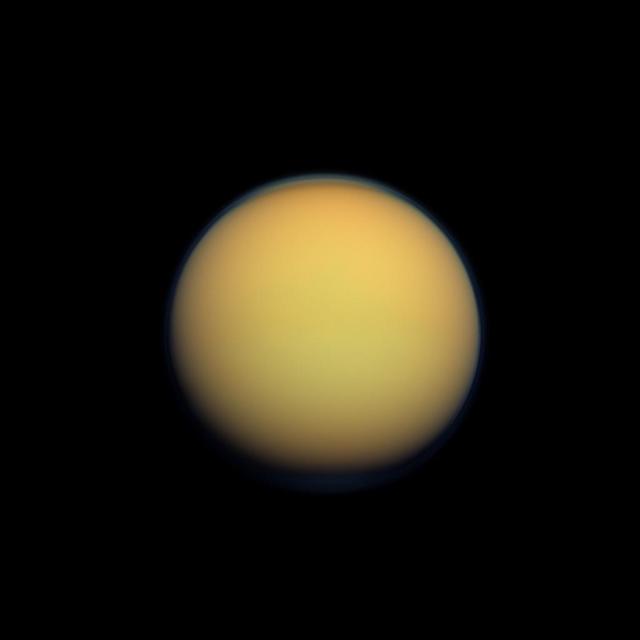 TitanTitan is the only moon in the Solar System with a dense atmosphere – denser even than Earth's.
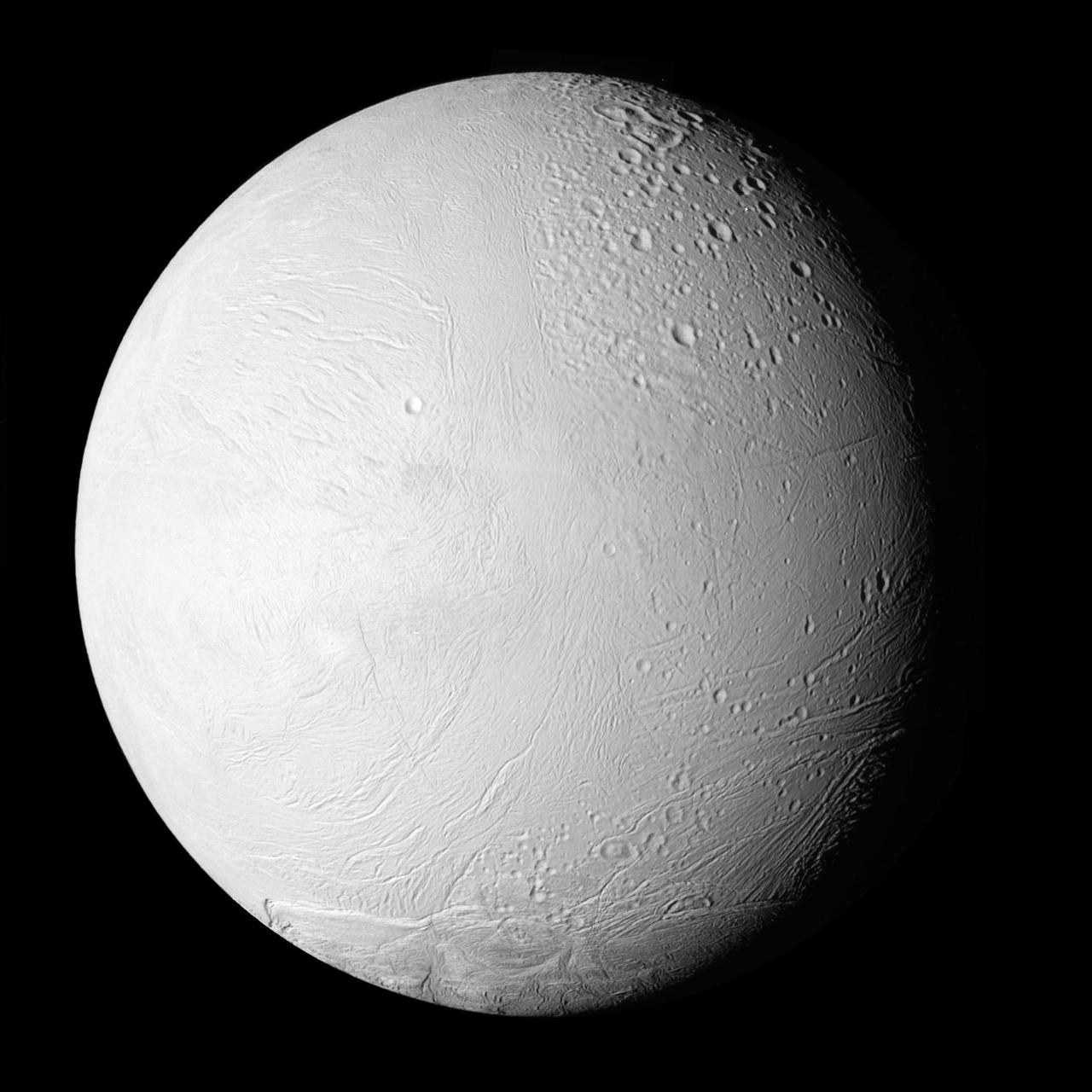 EnceladusEnceladus shoots huge fountains of water vapour and ice into space from cracks at its south pole.
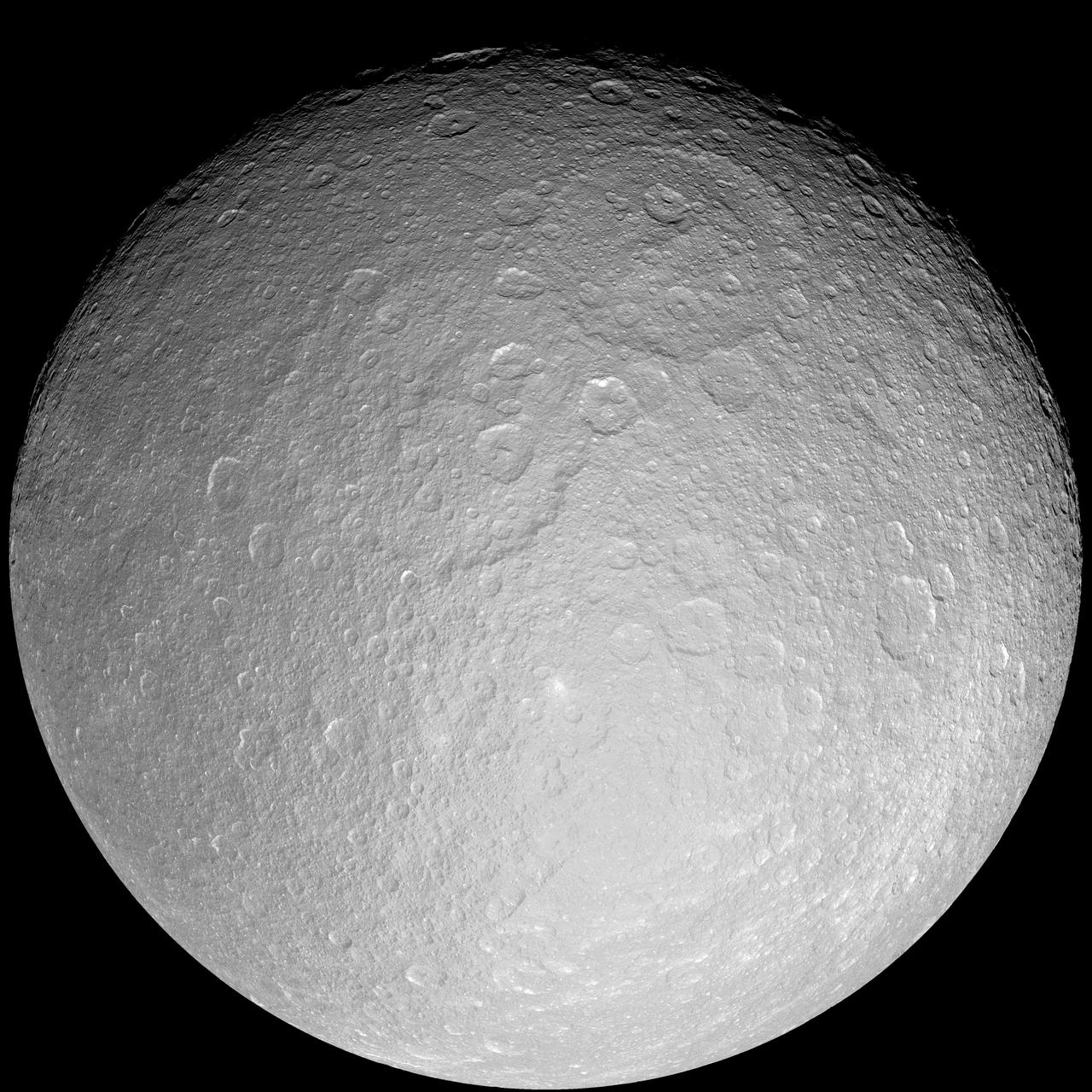 RheaRhea is Saturn's second-largest moon after Titan.
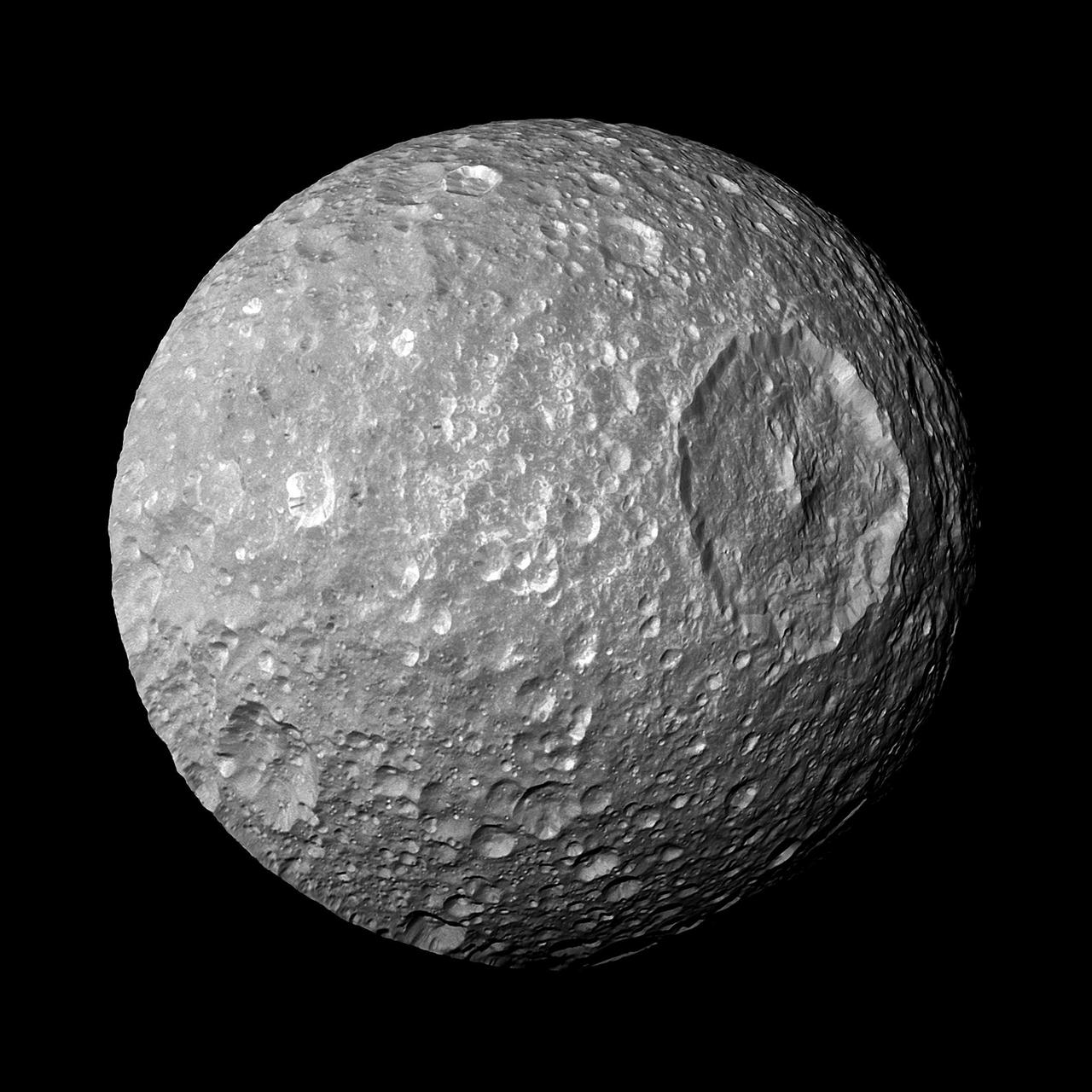 MimasIts giant crater Herschel (130 km, a third of the moon) makes Mimas look like the “Death Star” from Star Wars.
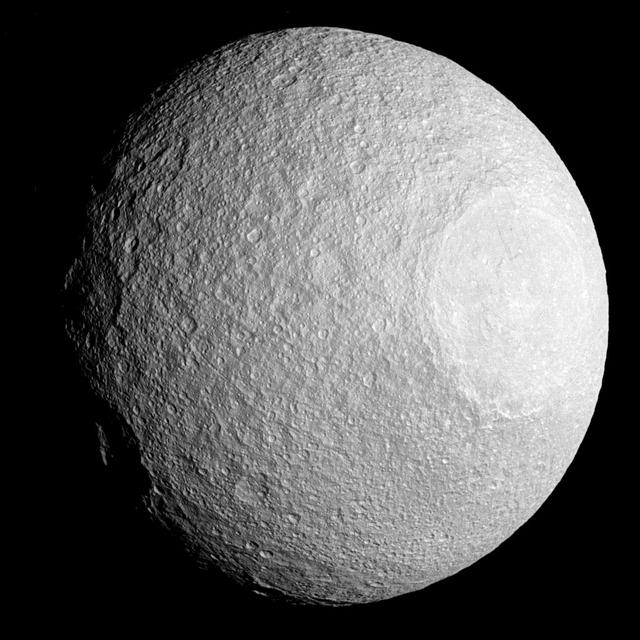 TethysTethys is made almost entirely of water ice – it is barely denser than water.
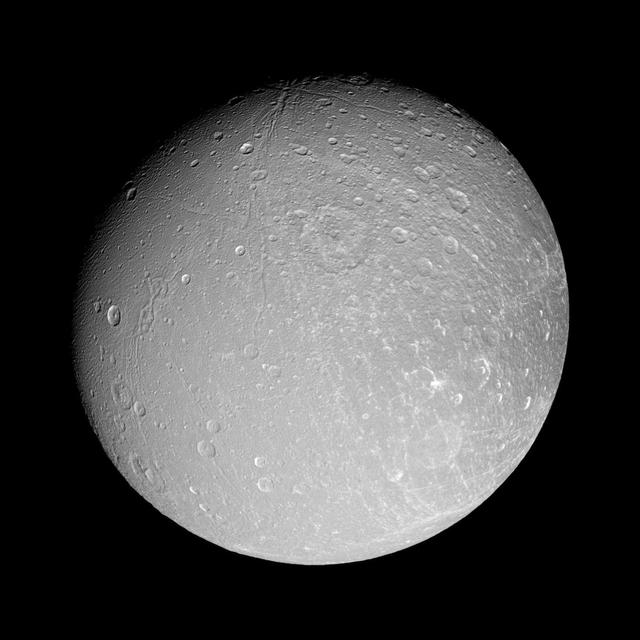 DioneThe bright “wisps” on Dione are in fact ice cliffs hundreds of metres high.
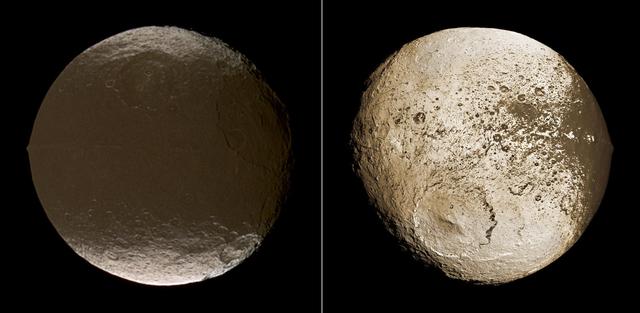 IapetusIapetus is two-toned: one side is as dark as coal, the other as bright as snow.
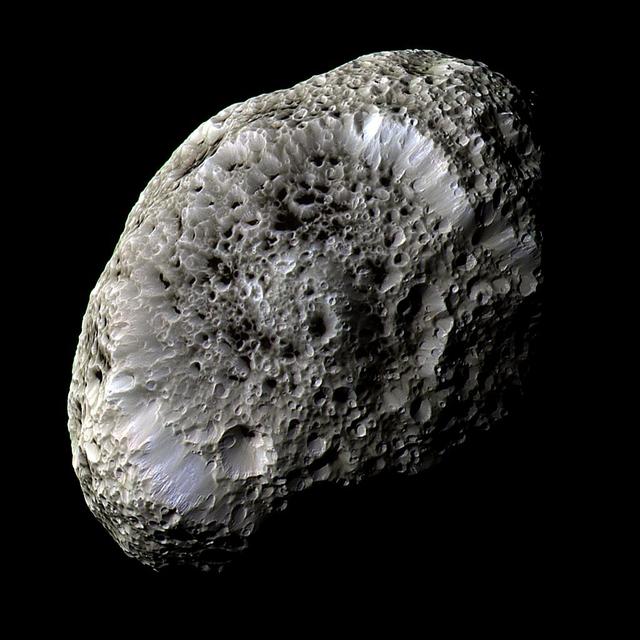 HyperionHyperion looks like a giant sponge and is not round but potato-shaped.
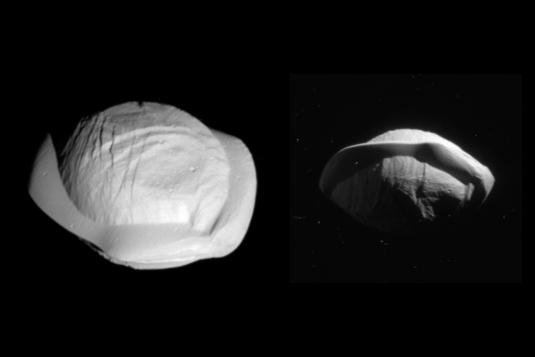 PanPan looks like a ravioli or a walnut: a ridge of ring material has built up around its equator.
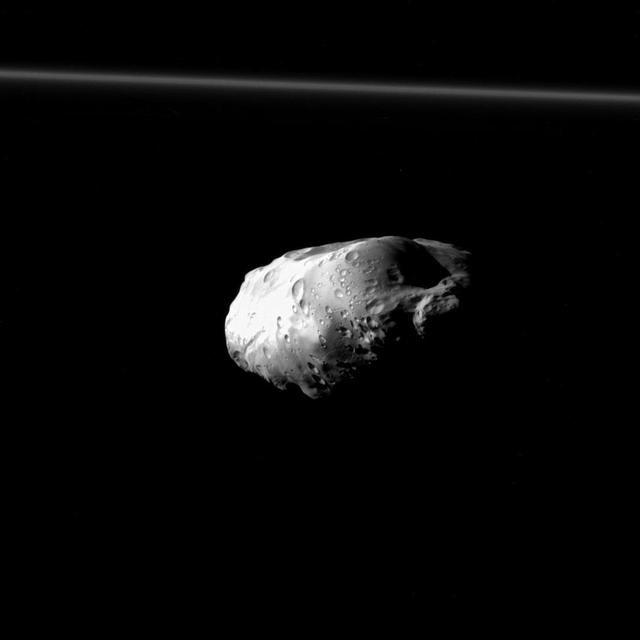 PrometheusTogether with Pandora, Prometheus is a “shepherd” of Saturn's narrow F ring.
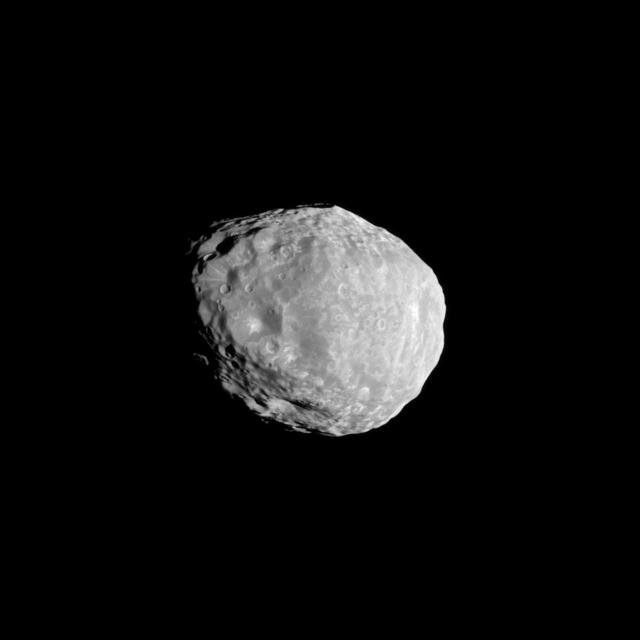 JanusJanus shares its orbit with Epimetheus – and every four years the two swap places.
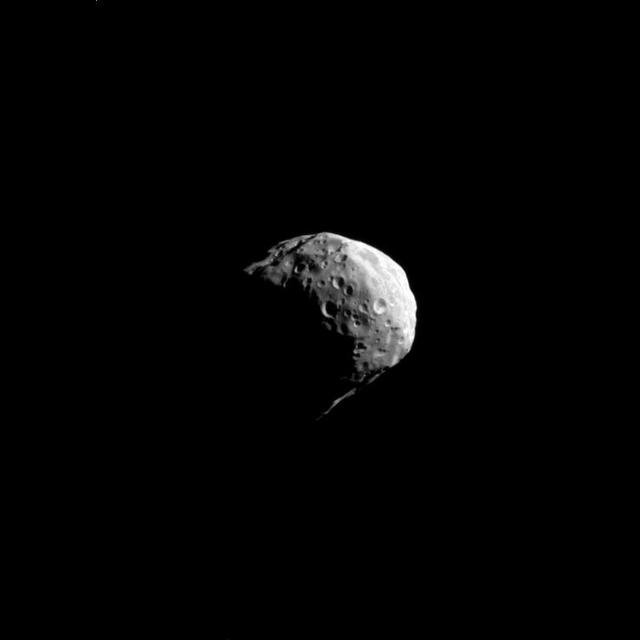 EpimetheusEpimetheus is Janus's “orbital partner”: when the two come close, gravity nudges each onto the other's orbit.
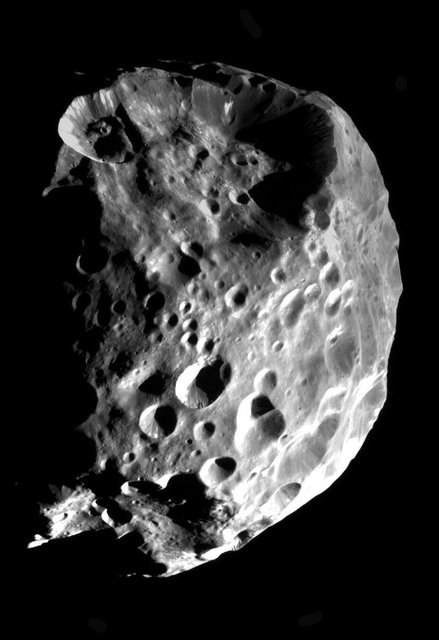 PhoebePhoebe orbits Saturn backwards and far out – probably a captured body from the outer Solar System.
Space probes at Saturn
Test your knowledge of Saturn
Which planet has the most striking ring system?
Saturn. Saturn's rings are made mostly of water ice and are extremely thin – often only about ten metres thick.
Which probe deliberately plunged into Saturn's atmosphere in 2017?
Cassini. That way Cassini could not contaminate the moons Titan and Enceladus with microbes from Earth.
What are Saturn's rings mostly made of?
Water ice. The chunks range from the size of a dust grain to the size of a house. That is why the rings shine so brightly.
Which planet has a giant hexagon at its north pole?
Saturn. A jet stream forms an almost perfect hexagon there – each side is longer than Earth's diameter.
The full quiz with points and badges is in the 3D model under “Explore”.
Saturn in the tours
This site is free and has no banner ads. Here is how you can support it