Home › Space probes › Cassini-Huygens
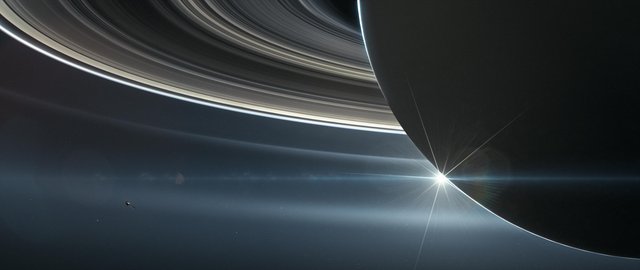
Artist's impression
Space probe
Cassini-Huygens
Cassini-Huygens is a space probe. Cassini orbited Saturn for 13 years and sent more than 450,000 images back to Earth.
Fact file
- Type
- Space probe
- Launch
- 15 October 1997
- End of mission
- 15 September 2017
Interesting facts about Cassini-Huygens
- Cassini orbited Saturn for 13 years and sent more than 450,000 images back to Earth.
- It carried the European lander Huygens, which touched down on Titan in 2005.
- To avoid contaminating the moons, Cassini was deliberately plunged into Saturn at the end.
Frequently asked questions about Cassini-Huygens
Why did Cassini crash into Saturn?
On 15 September 2017 Cassini was deliberately sent to burn up in Saturn. That way the probe could never one day crash onto Enceladus or Titan and contaminate these moons with germs from Earth.
What did Cassini discover?
Cassini discovered the fountains of Enceladus and the methane lakes on Titan, as well as new moons and many details of the rings. The probe orbited Saturn for 13 years.
When was Cassini-Huygens launched?
The mission began on 15 October 1997. It ended on 15 September 2017.
Which celestial bodies has Cassini-Huygens visited?
Cassini-Huygens visited Venus, Jupiter and Saturn. All milestones with their dates are listed further down this page.
The mission
A joint mission of NASA, ESA and the Italian Space Agency – at 5.6 tonnes one of the largest planetary probes.
Technology and flight
On its way to Saturn, Cassini gained speed four times: twice at Venus, once at Earth and once at Jupiter.
Discoveries
It discovered the plumes of Enceladus, methane lakes on Titan, new moons and details of the rings. In the “Grand Finale” it flew 22 times between Saturn and its rings.
For comparison
The mission cost about 3.9 billion dollars – spread over 20 years, less than one Swiss franc per US resident per year.
Mission milestones
- Launch at Earth
Launch on a Titan IVB rocket from Cape Canaveral.
- Venus (1) at Venus
First swing-by of Venus.
- Venus (2) at Venus
Second swing-by of Venus.
- Earth at Earth
Earth flyby at an altitude of only 1,200 km.
- Jupiter at Jupiter
Jupiter flyby with about 26,000 images – including the best colour portrait of the planet up to then.
- Arrival at Saturn at Saturn
Entering orbit around Saturn – through a gap in the rings.
- Huygens lands on Titan
The European probe Huygens lands on Titan – to this day the most distant landing ever.
- Grand Finale
Cassini plunges into Saturn's atmosphere and burns up. It sent back measurements to the very end.
Cassini-Huygens in the tours
This site is free and has no banner ads. Here is how you can support it