Home › Watching the sky › Meteor showers › Leonids
Leonids 2026: shooting stars on the night of 17 to 18 November
The Leonids peak on the night of 17 to 18 November 2026 at 00:45 CET. It is best to look after midnight until about 05:45, because the Moon sets at midnight. Do not expect a meteor storm this year: the ZHR is about 15 (IMO), and that is a guide value for ideal conditions. In practice you usually see fewer.
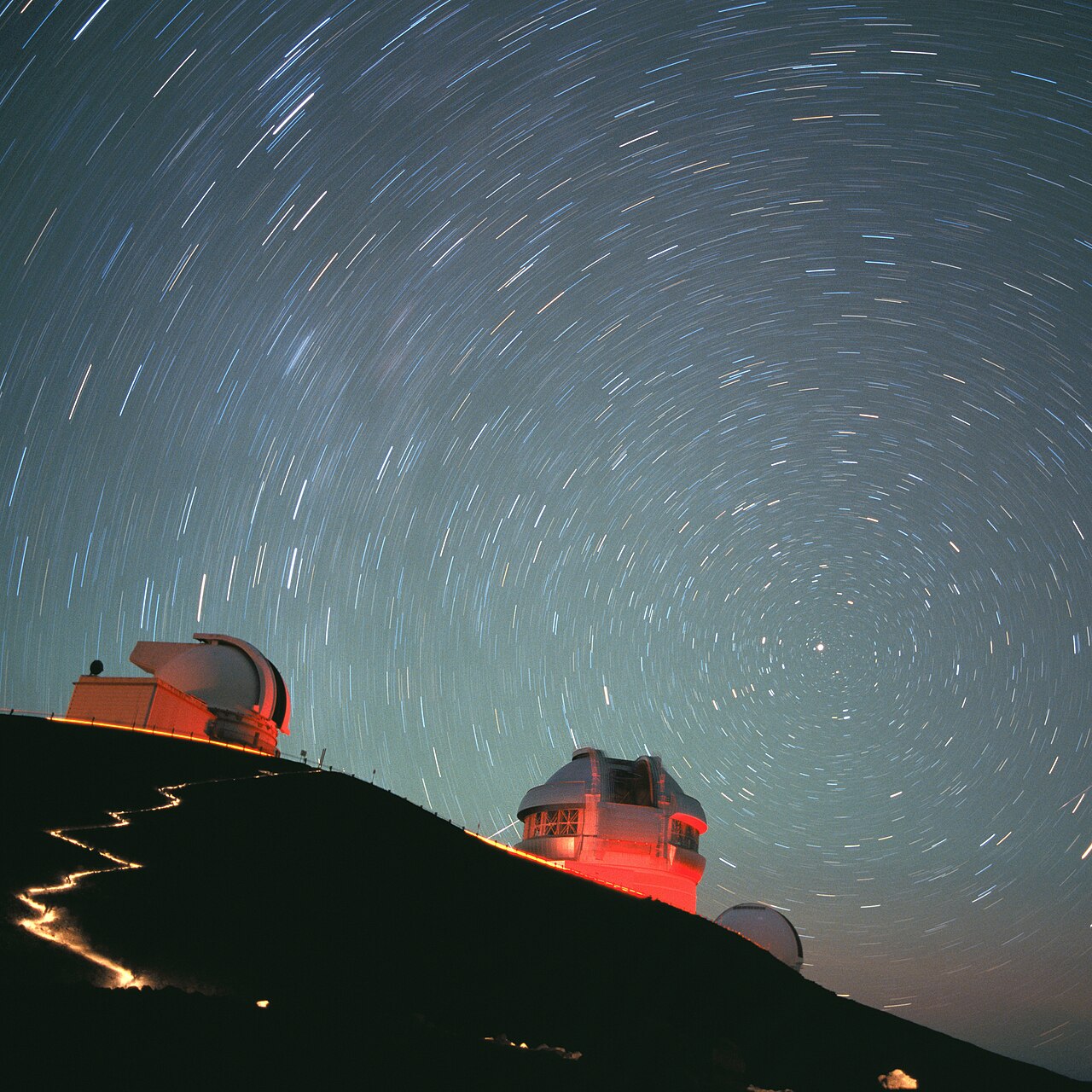
The 2026 Leonids in numbers
- Peak
- 18 November 2026, 00:45 CET (17 November, 23:45 Universal Time, UT)
- Best time in Zurich
- after midnight until twilight at 05:47
- Active
- 6 to 30 November
- ZHR (calculated figure)
- about 15, explained in the next section
- Speed
- 71 km/s
- Parent comet
- 55P/Tempel-Tuttle
- Radiant
- in the constellation Leo (right ascension 152°, declination +22°)
How many Leonids will you see?
The ZHR (zenithal hourly rate) is a calculated figure: the number of meteors per hour an observer would see under a perfectly clear, dark sky with the radiant at the zenith. For 2026 the meteor shower calendar of the International Meteor Organization (IMO) gives a ZHR of about 15. That is a guide value for ideal conditions.
In practice you usually see fewer. In Zurich that applies especially to the first hour after the peak, because the radiant is only 16 degrees high at the peak. From about 03:00 to 05:00 you will see more.
A meteor storm is not in sight for 2026. The IMO calendar cites model calculations by Vaubaillon and Sato (both 2025): Earth meets several dust trails of low density. According to Vaubaillon the particles are not enough for significant activity, according to Sato at most for slight activity. Neither a storm nor an outburst is therefore expected.
Another calculation (Maslov 2007) puts the peak on 17 November at 16:00 Universal Time, that is 17:00 CET. At 17:00 the Sun has only just set in Zurich (16:48), and the sky does not become astronomically dark until 18:35. This calculation also expects a ZHR of about 15.
Best time and Moon in Zurich
The Moon hardly interferes in 2026. First quarter is on 17 November, and in Zurich the Moon sets at midnight. By the peak at 00:45 it is already gone. The best time is therefore after midnight until twilight at 05:47: the later, the higher the radiant.
| Time (CET) | What happens |
|---|---|
| 17 November, 12:48 | First Quarter |
| 17 November, 13:29 | The Moon rises |
| 17 November, 16:48 | The Sun sets |
| 17 November, 18:35 | The sky is astronomically dark |
| 17 November, around 23:00 | The radiant in Leo rises |
| 18 November, 00:01 | The Moon sets (about 54 to 56% illuminated that night) |
| 18 November, 00:45 | Peak of the Leonids |
| 18 November, 05:47 | Astronomical twilight begins |
| 18 November, 07:35 | The Sun rises |
This is how high the radiant stands above the horizon:
| Time (CET) | Height of the radiant above the horizon |
|---|---|
| around 23:00 | 0° (rising) |
| 00:00 | approx. 9° |
| 00:45 | approx. 16° (peak) |
| 02:00 | approx. 28° |
| 04:00 | approx. 48° |
| 05:00 | approx. 57° |
| 05:47 | approx. 62° (start of twilight) |
Towards morning the radiant stands high in the south to south-east.
Times in CET (Universal Time plus 1 hour), calculated for Zurich (47.37° N, 8.54° E, 410 m) with Astronomy Engine by Don Cross; calculation of 9 November 2026. Elsewhere in Switzerland the times shift by a few minutes.
Tips for watching
- Go to a dark place, far away from street lights and city lights, for example in the countryside or the mountains.
- Wrap up warm and lie down, ideally on a lounger or a mat. Look at as large an area of sky as possible: the meteors can flash up anywhere in the sky.
- Wait 20 to 30 minutes until your eyes have adapted to the dark. Dim the light on your phone.
- Check the weather first: clouds and haze spoil the view. You do not need binoculars or a telescope.
- Allow plenty of time: the radiant climbs higher during the night, and from about 03:00 to 05:00 you will see more than at the start.
▶ Open “What can I see tonight?”
Where do the Leonids come from?
The Leonids come from Comet 55P/Tempel-Tuttle. It leaves dust along its orbit. When Earth crosses this trail, the dust particles burn up as meteors in the atmosphere. At 71 km/s the Leonids are, according to Wikipedia, the fastest annual meteor shower.
The comet’s next perihelion (the point of its orbit closest to the Sun) is on 20 May 2031. The particles we meet in 2026 travel ahead of the comet. The radiant lies in the constellation Leo: the meteors seem to start from there.
History: meteor storms of the Leonids
About every 33 years, around the comet’s perihelion passages, there are meteor storms. The figures are estimates from the English-language Wikipedia:
- 902: the oldest known record of the Leonids.
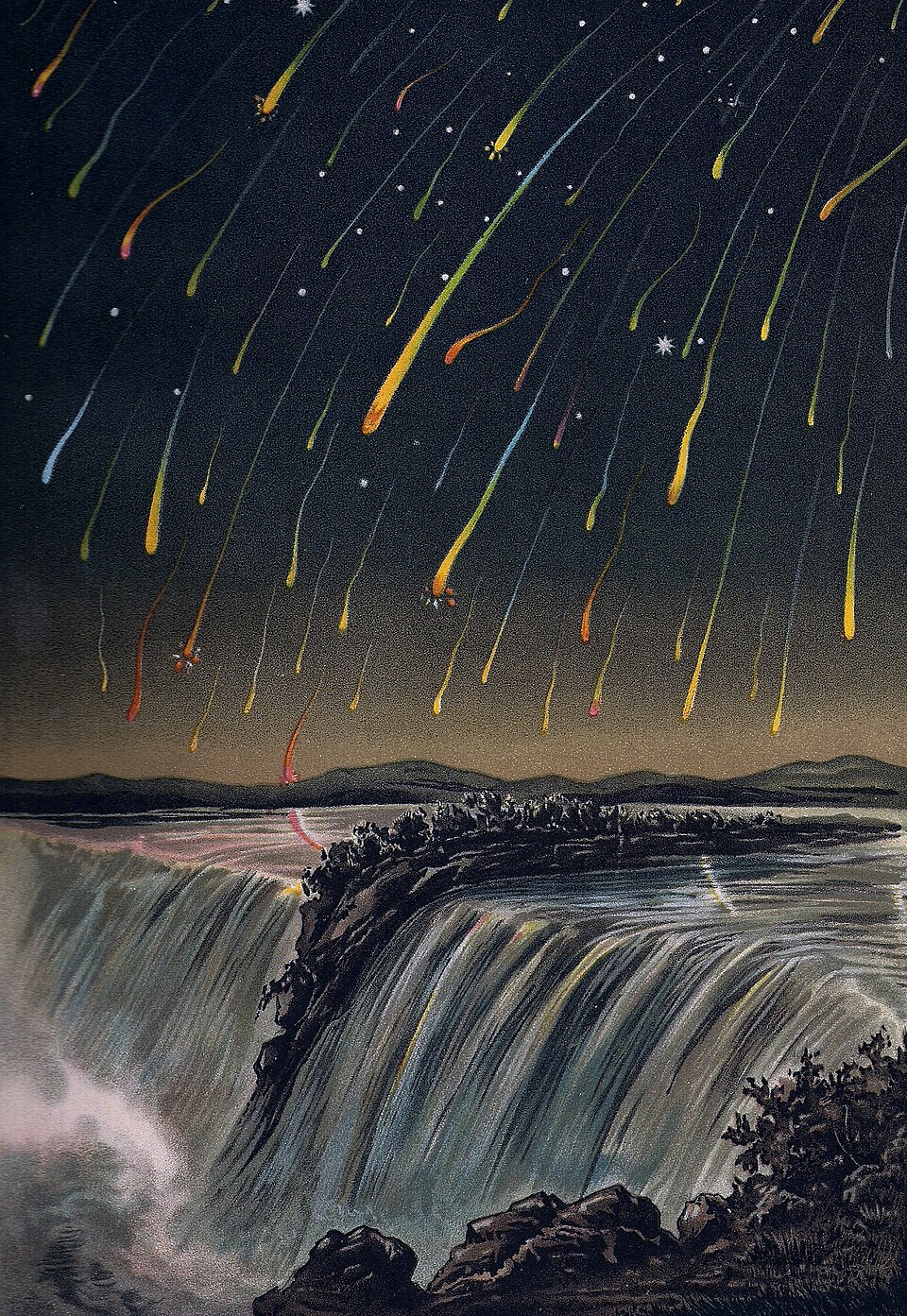
- 12/13 November 1833: meteor storm. One estimate puts the peak rate at over 100,000 meteors per hour; other estimates differ. The German Wikipedia gives up to 200,000 in the night.
- 1866/67: data on Comet Tempel-Tuttle show that it is the source of the Leonids.
- 1966: over America, peak rates of more than 40 meteors per second (144,000 per hour).
- 1999, 2001 and 2002: storms with up to about 3,000 Leonids per hour.
Frequently asked questions about the 2026 Leonids
When is the best time to see the Leonids in 2026?
On the night of 17 to 18 November 2026. The peak is on 18 November at 00:45 CET. In Zurich the best time is after midnight until twilight begins at 05:47: the Moon has set by then, and the radiant stands higher.
Will there be a Leonid meteor storm in 2026?
No. The model calculations in the IMO calendar show only dust trails of low density for 2026. Neither a storm nor an outburst is expected. The ZHR is about 15 (IMO), a guide value for ideal conditions; in practice you usually see fewer.
Will the Moon interfere with the Leonids in 2026?
Hardly. First quarter is on 17 November (12:48 CET), and in Zurich the Moon sets at midnight. By the peak at 00:45 it has already set.
What does ZHR mean?
ZHR stands for zenithal hourly rate. It is a calculated figure: the number of meteors per hour an observer would see under a perfectly clear, dark sky with the radiant at the zenith. For the Leonids in 2026 it is about 15 according to the IMO. In practice you usually see fewer.
Where do I have to look to see the Leonids?
The meteors seem to come from the constellation Leo but can flash up anywhere in the sky. In Zurich the radiant is only 16 degrees high at 00:45. Towards morning it stands high in the south to south-east, at just over 60 degrees when twilight begins at 05:47.
Sources
- International Meteor Organization (IMO), Arbeitskreis Meteore: Meteor Shower Calendar 2026 (German edition, section “Leoniden”, table 5) – retrieved on 9 November 2026
- Wikipedia (English): Leonids – retrieved on 9 November 2026
- Own calculation for Zurich with Astronomy Engine by Don Cross – calculated on 9 November 2026
- Images: licences checked on 9 November 2026 via Wikimedia Commons: Leonid Meteor Shower over Maunakea (NOIRLab), Leonid Meteor Storm 1833


Read on
- Meteor showers: the main showers and their dates
- Constellation Leo: legend, stars and map
- Moon phases and lunar calendar
- Night sky tonight
- Watching the sky
This site is free and has no banner ads. Here is how you can support it