Planet
Neptune
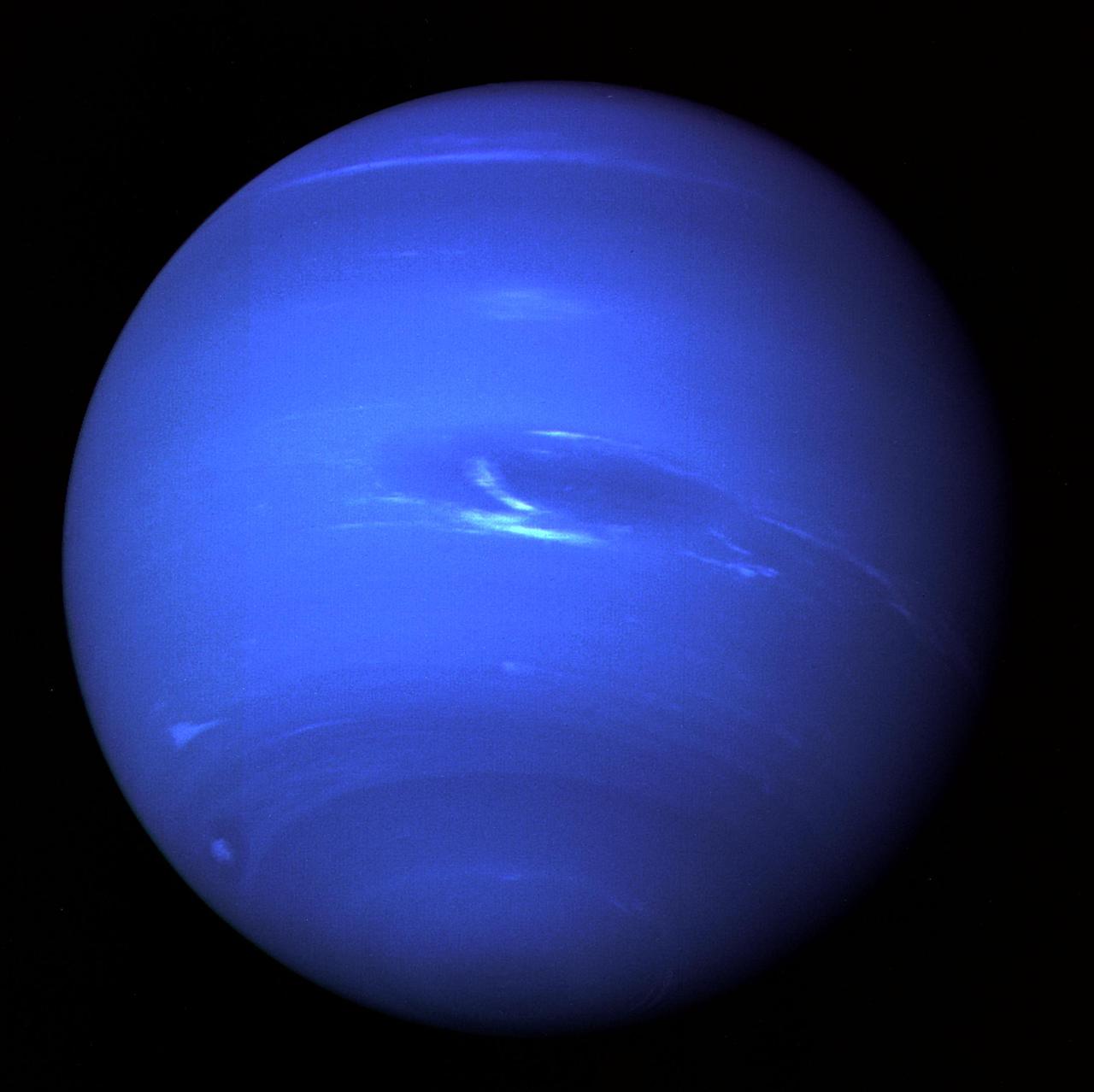
Neptune is the outermost planet and deep blue. The strongest winds in the Solar System blow there – much faster than any storm on Earth. It takes 165 years to go once around the Sun.
Fact file
- Type
- Planet
- Diameter
- 49,244 km
- Distance from the Sun
- 4,495,000,000 km
- Orbital period
- 163.7 years
- Shape of orbit (eccentricity)
- 0.011 (0 = circle)
- Orbital inclination
- 1.77° to Earth’s orbit
- Axial tilt
- 28.3°
- Temperature
- -201 °C on average
- Mass
- 17.1 Earth masses
- Gravity
- 1.14 times as strong as on Earth
- Escape velocity
- 23.5 km/s
- Length of day
- 16 hours 6 minutes
- Number of moons
- 16
Interesting facts about Neptune
- Neptune was predicted by mathematical calculations in 1846 before it was observed – a triumph of celestial mechanics.
- Neptune has the strongest winds measured in the Solar System, at up to 2,100 km/h.
- A year on Neptune lasts 165 Earth years – since its discovery it has completed only one orbit of the Sun (in 2011).
Frequently asked questions about Neptune
How was Neptune discovered?
In 1846 Neptune was first calculated and only then seen. The orbit of Uranus showed small deviations, from which Urbain Le Verrier worked out the position of an unknown planet. Johann Galle then found Neptune in Berlin almost exactly at that spot.
Why is Neptune blue?
The atmosphere of Neptune contains methane. This gas absorbs red light, which is why the planet looks deep blue.
How strong are the winds on Neptune?
Neptune has the strongest winds measured in the Solar System, at up to 2,100 km/h.
How big is Neptune?
Neptune has a diameter of 49,244 km. That is about 3.9 times the diameter of Earth.
How far is Neptune from the Sun?
Neptune is on average 4.5 billion km from the Sun. That is 30.05 astronomical units (AU). Sunlight takes about 4.2 hours to cover this distance.
How long is a year on Neptune?
Neptune takes 163.7 Earth years to travel once around the Sun.
How many moons does Neptune have?
Neptune has 16 known moons. The best known include Triton, Nereid and Proteus.
How cold or warm is it on Neptune?
On Neptune the average temperature is −201 °C.
The ring system
Neptune has five faint, dark rings, named after astronomers connected with Neptune's discovery: Galle, Le Verrier, Lassell, Arago and Adams. The outermost one, the Adams ring, is a puzzle: it contains bright, clumpy arcs (“Courage”, “Liberté”, “Égalité”, “Fraternité”), although ring material ought to spread out evenly. The small moon Galatea probably holds them together with its gravity. The arcs were discovered in the 1980s and confirmed by Voyager 2 in 1989. They have been changing ever since – Liberté has almost vanished.
Name and discovery
After the Roman god of the sea – because of its deep blue colour.
Discovered on 23 September 1846 by Johann Galle in Berlin – exactly where Urbain Le Verrier had calculated it would be.
Formation
Like Uranus, Neptune is an ice giant, formed from ice, rock and gas at the outer edge of the protoplanetary disc.
Atmosphere
The atmosphere is made of hydrogen, helium and methane, which gives it its intense blue colour.
Exploration
Neptune, too, has been visited only once so far: by Voyager 2 in 1989, which also photographed its large moon Triton.
Compared with Earth
Neptune is almost 4 times the diameter of Earth and about 17 times as heavy.
Structure: what Neptune looks like inside
- Rocky core: Rock and iron, about as heavy as Earth.
- Ice mantle: A hot fluid of water, ammonia and methane – here too it could rain diamonds.
- Hydrogen-helium envelope: A gas envelope with the fastest winds in the Solar System (up to 2,100 km/h).
Moons of Neptune
Neptune has 16 known moons. These 3 have a fact file of their own:
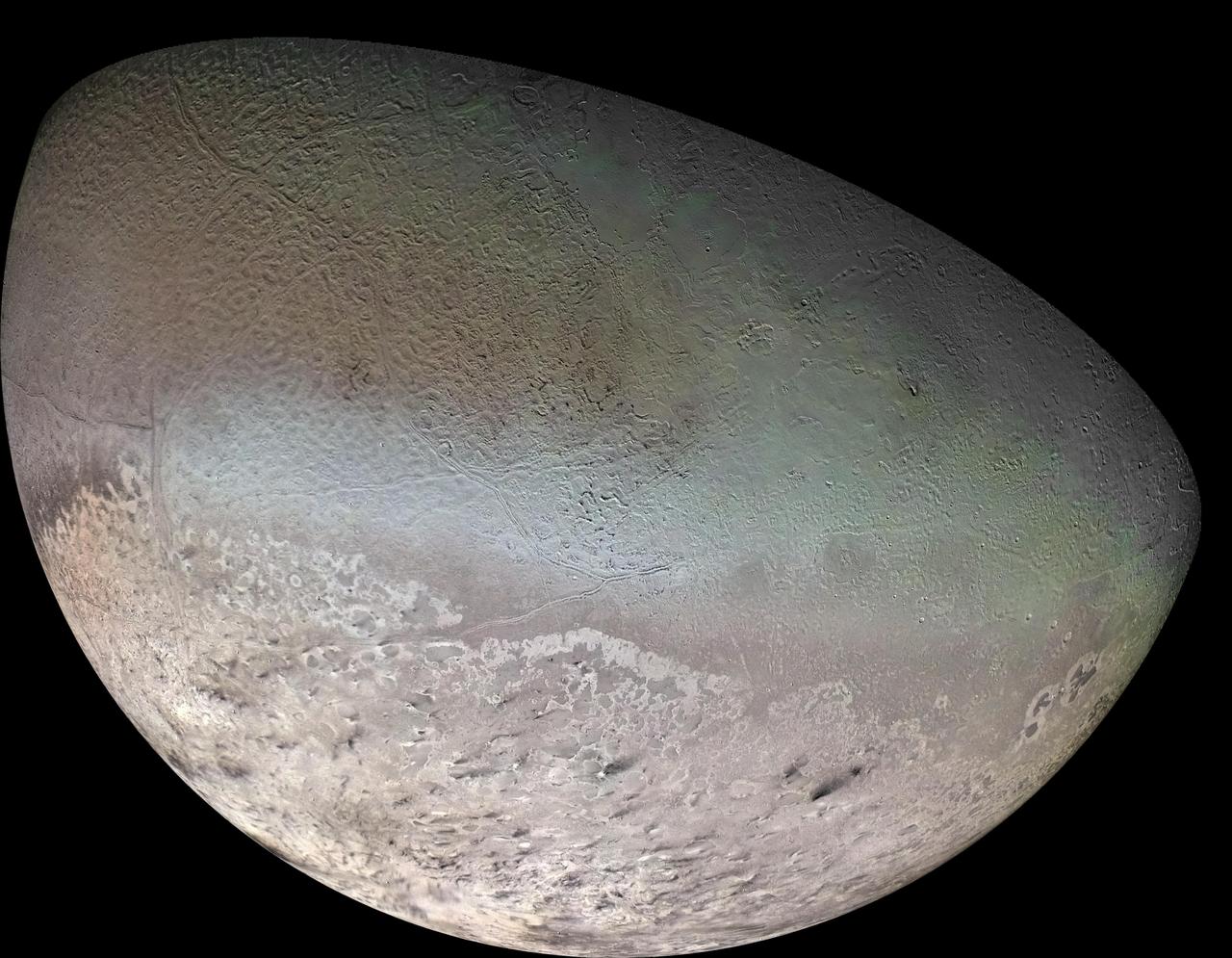 TritonTriton orbits Neptune backwards – it was probably captured from the Kuiper Belt and is a “cousin” of Pluto.
 NereidNereid has one of the most elongated orbits of any moon: its distance from Neptune varies between 1.4 and 9.7 …
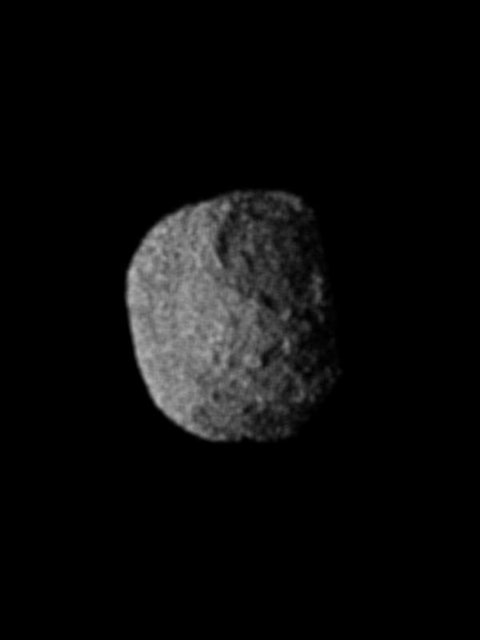 ProteusProteus is Neptune's second-largest moon – yet it was not discovered until 1989, by Voyager 2, because it is …
Space probes at Neptune
Test your knowledge of Neptune
Which planet was first found by calculation rather than by observation?
Neptune. Le Verrier and Adams calculated the position from disturbances in the orbit of Uranus – in 1846 Neptune was found there.
The full quiz with points and badges is in the 3D model under “Explore”.
Neptune in the tours
This site is free and has no banner ads. Here is how you can support it