Home › Universe › The observable universe
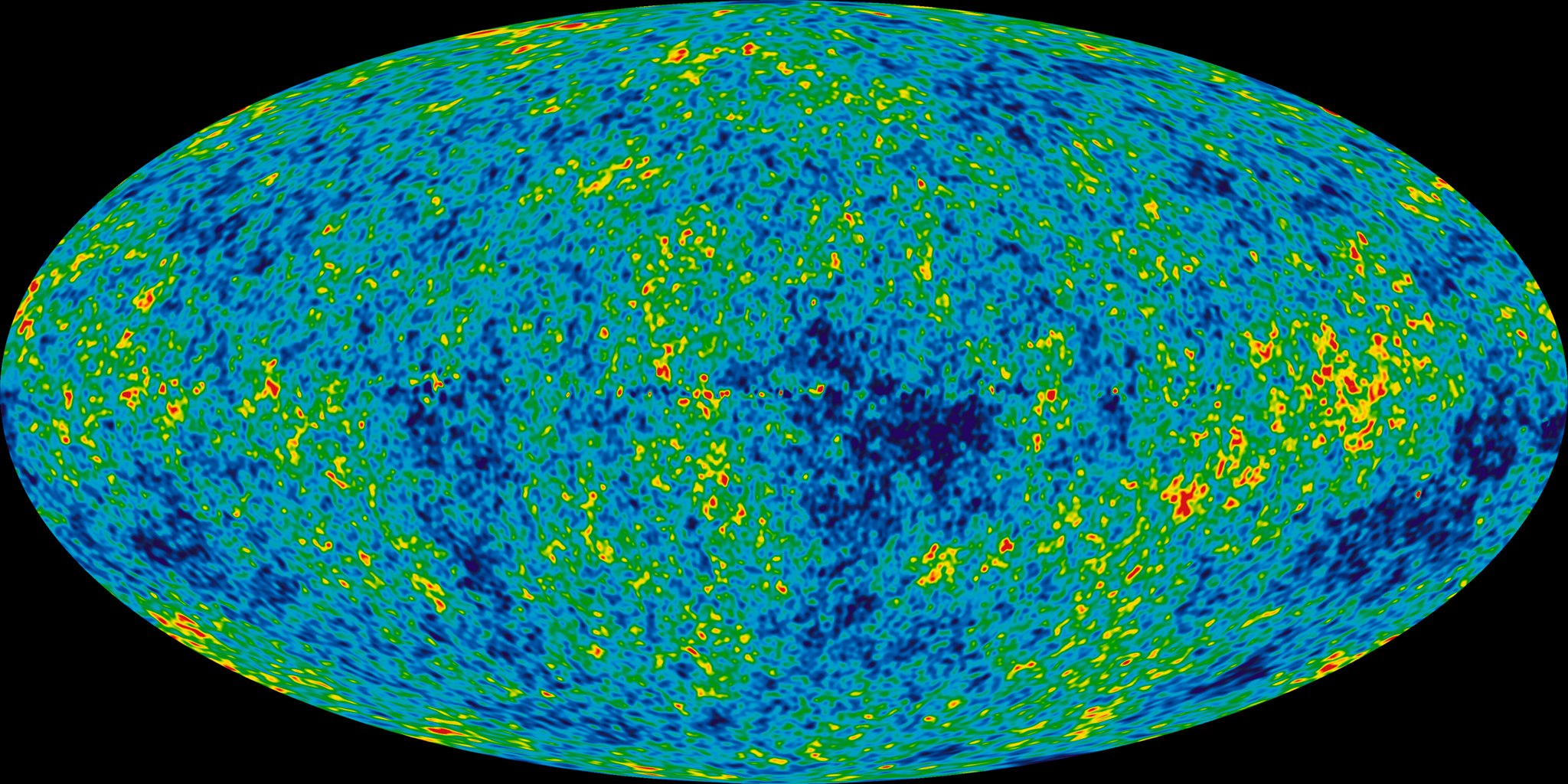

everything we can see at all
The observable universe
Galaxies more than about 14 billion light-years away are moving away from us faster than light. This breaks no rule: it is not that they fly so fast, but that the space in between is growing.
Key figures
- Age
- 13.8 billion years
- Diameter
- about 93 billion light-years
- Galaxies
- several hundred billion to 2 trillion
- Expansion
- about 70 km/s for every 3.3 million light-years of distance
- Ordinary matter
- only about 5% – the rest is dark matter and dark energy
Interesting facts
- Light that distant galaxies send out today will never reach us if they are more than about 16 billion light-years away. So in the far future the visible universe will become emptier.
- The further away a galaxy is, the redder its light appears: the growing space stretches the light waves. This is called redshift.
Why 93 and not 27 billion?
The universe is 13.8 billion years old. You might think that we can therefore see 13.8 billion light-years far. But while the oldest light was on its way to us, space stretched. The places it set off from are now about 46 billion light-years away – in every direction. That is why the sphere is 93 billion light-years across.
Are we at the centre?
Only seemingly. Every observer, no matter in which galaxy, sees a sphere like this around them – just as on the open sea you can see to the same horizon in every direction. The universe has no centre.
The rings in the picture
The rings show how long the light has been travelling. We see galaxies on the innermost ring as they looked 5 billion years ago, when the Sun was just forming. Right at the outside we see the universe as a baby.
Where is it?
The observable universe belongs to the “The observable universe” level of the Cosmic Zoom (field of view about 93 billion light-years). As far as we can see at all. Light needs time – looking into the distance means looking into the past. At the edge glows the oldest light, from 380,000 years after the Big Bang. Right in the middle, invisibly small, is where we are.
This site is free and has no banner ads. Here is how you can support it