Home › Space probes › International Space Station (ISS)
Space probe
International Space Station (ISS)
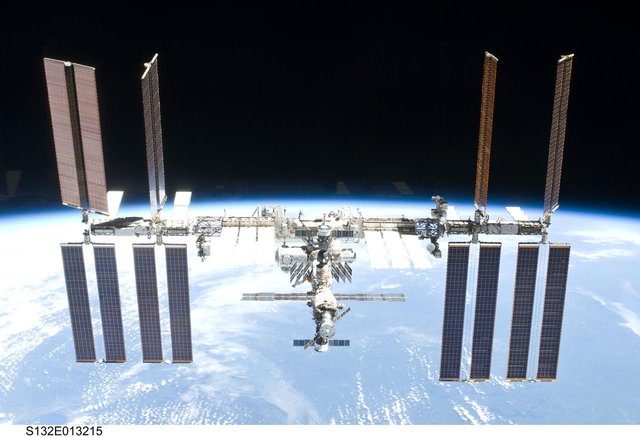
The International Space Station, the ISS, is a house in space. Astronauts live and do research there. It goes around Earth in 90 minutes – so they see 16 sunrises every day!
▶ View the International Space Station (ISS) in the 3D model
Fact file
- Type
- Space probe
- Launch
- 20 November 1998
Interesting facts about the International Space Station (ISS)
- The ISS circles Earth every 90 minutes at an altitude of about 400 km – the crew sees 16 sunrises and sunsets a day.
- It is about the size of a football pitch and the most expensive structure humankind has ever built.
- You can see it with the naked eye: as a bright point gliding steadily across the evening or morning sky.
Frequently asked questions about the ISS
How fast does the ISS fly?
The ISS flies at about 28,000 km/h at an altitude of roughly 400 km. It takes only about 90 minutes to go once round Earth.
Can you see the ISS from Earth?
Yes, with the naked eye. The ISS moves across the evening or morning sky as a bright, steady point of light. It does not blink and is gone again after a few minutes.
How long have people been living on the ISS?
The ISS has been continuously inhabited since 2 November 2000. There are usually seven astronauts working there.
When was the ISS launched?
The mission began on 20 November 1998.
The mission
A joint project of the USA, Russia, Europe (ESA, with Swiss participation), Japan and Canada, assembled piece by piece in space.
Technology and flight
Inside there is normal air, just like on Earth. The astronauts float because the station is constantly “falling” around Earth – not because there is no gravity up there.
Discoveries
The ISS has been continuously inhabited since the year 2000. Research covers medicine, materials, plant growth and Earth itself. Around 2030 it is due to be brought down into the Pacific in a controlled way.
For comparison
At about 28,000 km/h, the ISS would cover the distance from Geneva to Romanshorn in less than 50 seconds.
Mission milestones
- First module
The Russian module Zarya is launched – the foundation stone of the station.
- First crew
The first long-duration crew moves in. Since then the ISS has not been uninhabited for a single day.
- Europe's laboratory
The European research module Columbus is docked.
- Last Space Shuttle
The last flight of a Space Shuttle brings supplies to the ISS – after that, Russian Soyuz and later American Dragon capsules take over.
This site is free and has no banner ads. Here is how you can support it